











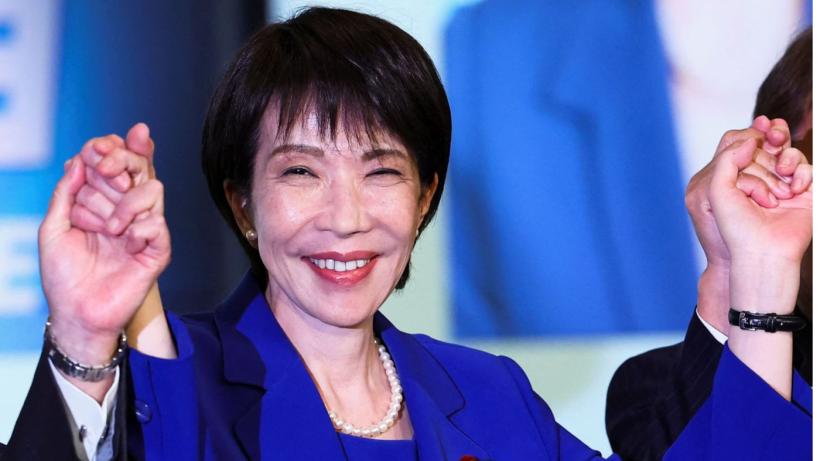

Japan’s ruling Liberal Democratic Party (LDP) has chosen conservative Sanae Takaichi as its head, setting her on the path to become the country’s first female prime minister. The decision, announced on Saturday, is set to jolt investors and neighbouring countries.
Takaichi, 64, was elected as the head of LDP, which has dominated Japan’s political landscape for nearly the entire post-war period, in a bid to restore public trust amid rising inflation and growing support for opposition parties advocating stimulus measures and tighter immigration controls, reports Reuters.
A parliamentary vote to appoint a successor to outgoing Japanese Prime Minister Shigeru Ishiba is scheduled for 15 October. Takaichi is favoured as the ruling coalition has the largest number of seats.
Taking charge amid party turmoil
As the only female contender among five LDP candidates, Takaichi won a runoff against the more moderate Shinjiro Koizumi, 44, who aimed to become Japan’s youngest modern prime minister.
A former economic security and internal affairs minister with an expansionary fiscal agenda for the world’s fourth-largest economy, Takaichi takes over a party in crisis.
Various other parties, including the expansionist Democratic Party for the People and the anti-immigration Sanseito, have been steadily luring voters, especially younger ones, away from the LDP.
The LDP and its coalition partner lost their majorities in both houses under Ishiba over the past year, triggering his resignation.
“Recently, I have heard harsh voices from across the country saying we don’t know what the LDP stands for anymore,” Takaichi said in a speech before the runoff. “That sense of urgency drove me. I wanted to turn people’s anxieties about their daily lives and the future into hope.”
Citing Britain’s first female prime minister Margaret Thatcher as her hero, Takaichi proposes a more pronounced shift than Koizumi and is seen as potentially more disruptive.
A supporter of late premier Shinzo Abe’s “Abenomics” policies promoting economic growth through aggressive spending and loose monetary policy, she has criticised recent interest rate hikes by the Bank of Japan (BOJ).
This stance could unsettle investors in Japanese bonds, concerned about the country’s massive debt, and may weaken the yen.
Naoya Hasegawa, chief bond strategist at Okasan Securities in Tokyo, said Takaichi’s election has reduced the likelihood of a BOJ rate hike this month, which markets had previously estimated at around 60%.
At a post-victory press conference, Takaichi outlined plans to cut taxes and increase subsidies but stressed the “importance of fiscal prudence.” She noted that BOJ policy must consider economic fragility and wage growth.
Sticking with Trump’s trade deal
Takaichi also affirmed her plan to uphold an investment agreement with US President Donald Trump, which reduced tariffs in exchange for Japanese taxpayer-backed investments, despite earlier suggestions she might renegotiate it.
US Ambassador to Japan, George Glass, congratulated her on X, expressing eagerness to deepen the Japan-US partnership “on every front.”
Mixed reactions to historic female leadership
Her election was hailed by some supporters as a landmark moment in Japan’s male-dominated political arena. Takaichi has pledged to increase the number of women in cabinet to levels comparable to Nordic countries.
“The fact that a woman was chosen might be seen positively. I think it shows that Japan is truly starting to change and that message is getting across,” said 30-year-old office worker Misato Kikuchi near Tokyo’s Shimbashi station.
However, her conservative social views, such as opposing allowing married couples to keep separate surnames, have made her more popular with men than women, according to opinion polls.
Her conservative appeal, however, may help blunt the rise of Sanseito, which broke into the political mainstream in a July election, appealing to voters disillusioned with the LDP.